Learn AI By Using It
It's counterintuitive in today's monetized certification culture.

“You learn to speak by speaking, to study by studying, to run by running, to work by working; and just so, you learn to love God and man by loving. All those who think to learn in any other way deceive themselves. Begin as a mere apprentice, and the very power of love will lead you on to become a master of the art.”
— St. Francis de Sales
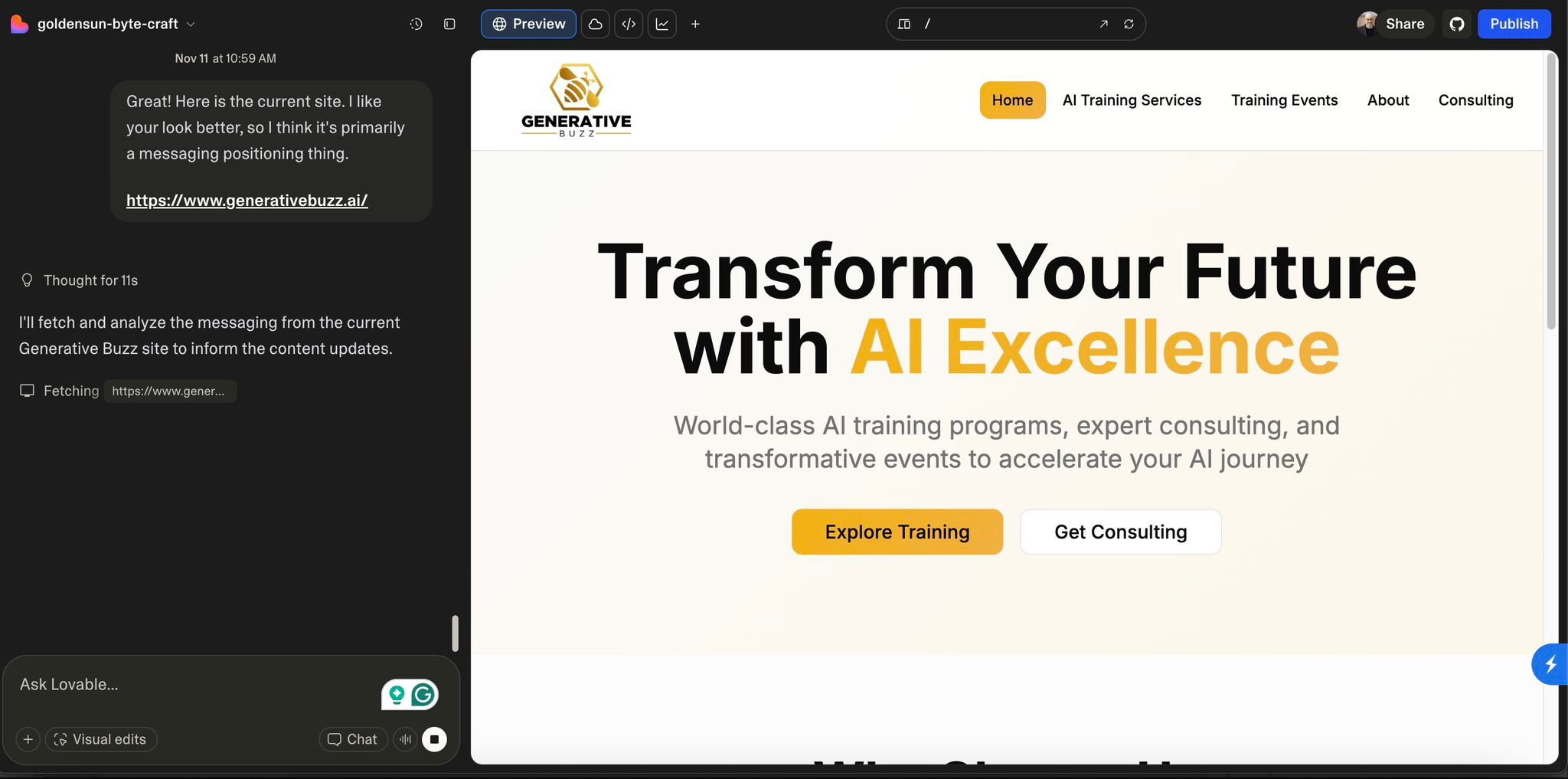
Yesterday, I posted that I was vibecoding a new website for my reborn solo consultancy. It was an intentional post showing how to learn now AI skills, through experimentation and an open willingness to fail. For it is through the use of AI that I learn it.
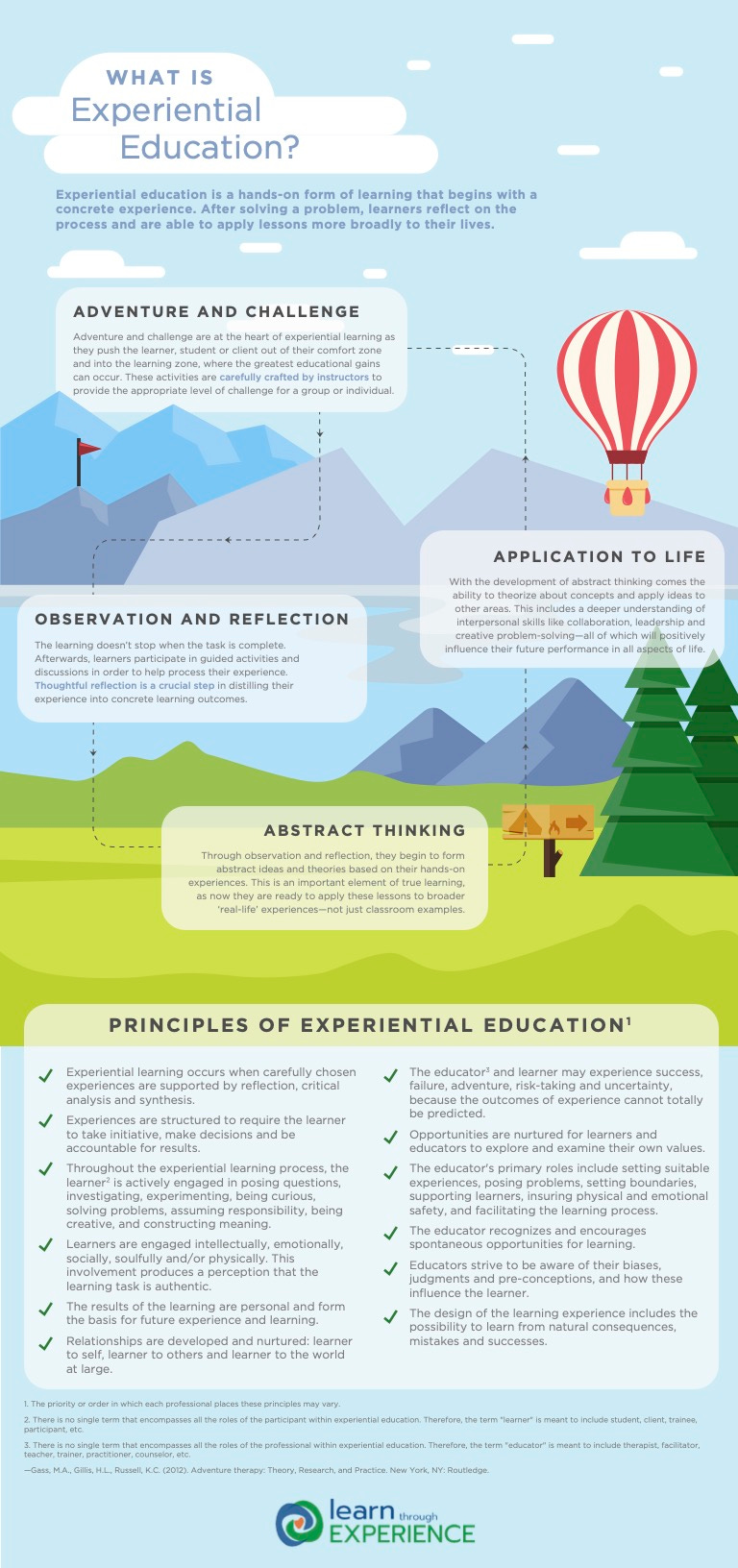
Experiential learning through potential use cases provides a deeper understanding of how AI works and doesn’t work to augment human labor. It becomes clear how this tool can best support specific roles, processes, and organizations. Repetitive use over weeks creates the habit of incorporating the tools into our efforts.
People are offered tools, told to use them, with policy and guidance (in some cases) on dos and don'ts, but don’t receive reinforcement learning through active learning exercises. If they are offered training, it is typically through a university, an association, or a training business’s certification program. In other instances, they receive training via an influencer’s AI Program.
Some of these are benefit students with AI studies and guides to provide baseline knowledge. While many provide valuable frameworks and guidance, the real breakthrough occurs when programs incorporate hands-on workshops and exercises that let you immediately apply what you’re learning. That’s where the magic happens.
Experiment or Find a Program That Will Guide You Through Experimentation

To give you an idea of how much money is invested in training, U.S. training expenditures were $98 billion in 2024, according to Training Magazine. Certifications are $28.4 billion, according to DataIntelo. Organizations and individual influencers are well vested in serving the market with in-demand AI programs.
The question is: what makes AI training truly stick?
We’ve heard about numerous workshops, panels, conferences, YouTube programs, and other initiatives that offer training in the form of presentation-centric experiences, statistics, and guides. The most effective AI training programs share a common element: They move beyond static information to include active learning exercises that engage attendees in meaningful projects directly applicable to their work.
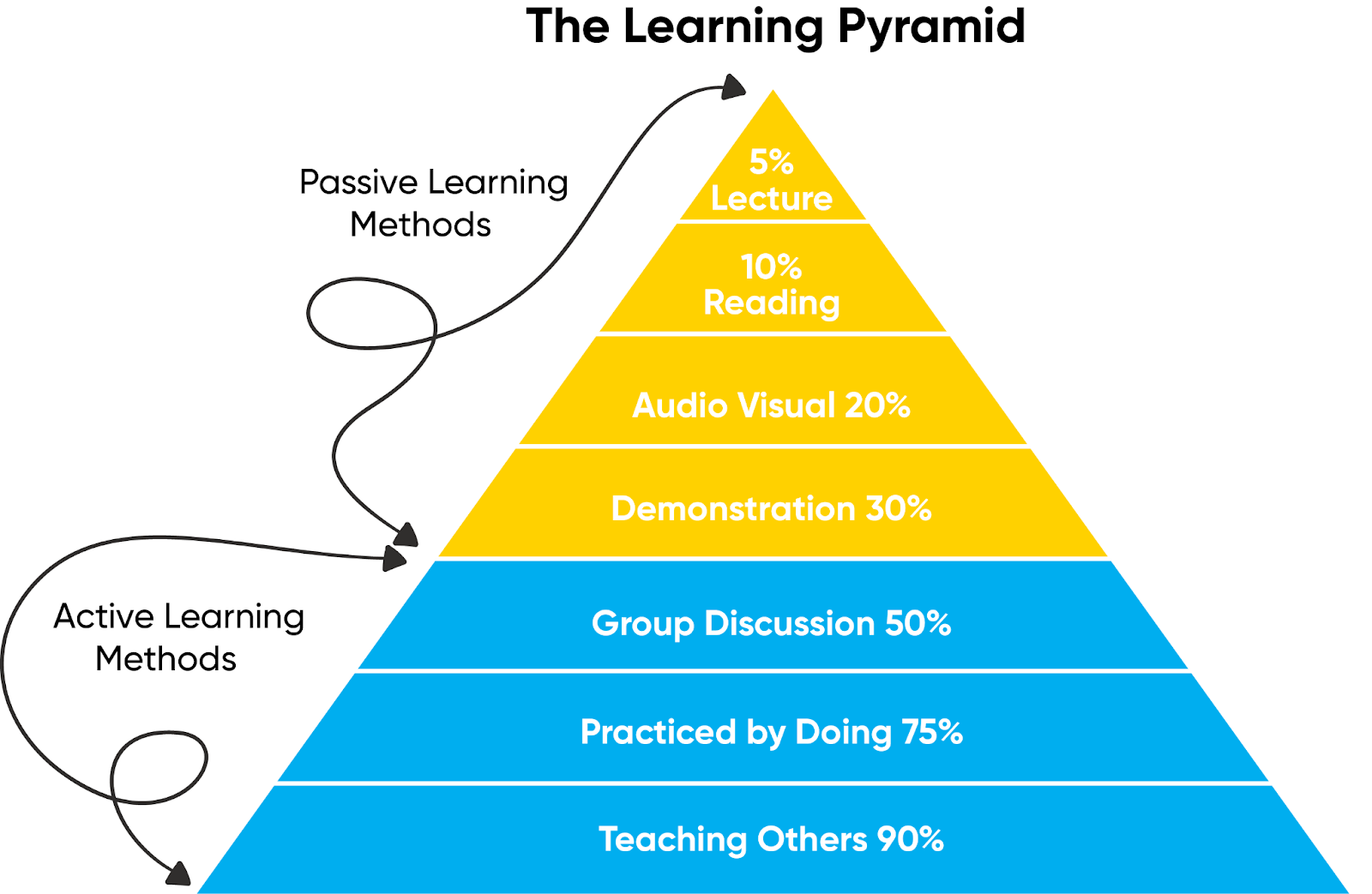
I believe that experiential learning with AI is the most effective method for professionals, as it provides the active learning necessary to foster retention. This is illustrated in the above graphic by Arlo, a depiction by the National Training Laboratories Institute’s Learning Pyramid. The theory was originally developed by Edward Cole in the 1940s and has been proven over time through pedagogical experiences.
As you can see, most AI training typically concludes with demonstrations. When training programs include active learning opportunities to reinforce their theories and guidance, they provide attendees with a much higher probability of retaining the taught skill or concept.
It should be clear, the quarterly AI bootcamp I designed is focused on two things:
Exercises illustrated through a show-and-tell methodology
Repetition over a period of four weeks to foster habit-creation
It also assumes that they have read and been taught or experienced plenty of guidance and theory. Instead, while touching on those, we do and learn together over a period of time through mini experiments. Almost every attendee who participates in and completes the exercises adopts daily AI use by the end of the boot camp. This is the value of experiential learning.
Whether you’re designing your own learning experiments or evaluating formal training programs, look for these elements: hands-on exercises, real-world applications, and repetition over time. The goal isn’t just to understand AI—it’s to make it a natural part of how you work. That transformation occurs through action, not just knowledge.
Good luck, friends!